Showing posts with label Story Ideas. Show all posts

Saturday, October 8, 2011

NaNoWriMo #04: So You've Got A Story Idea - Now What?


This week's post in preparation for NaNoWriMo 2011 looks at the steps that come immediately after you've found an idea for a story.  How do you turn an idea into a story spanning 50,000+ words?
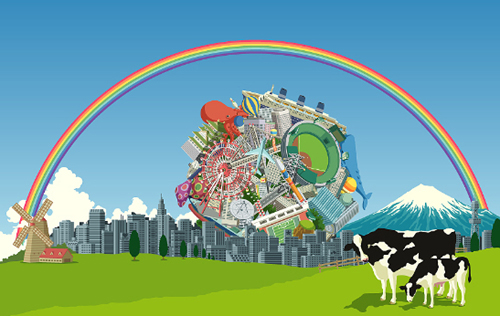


In many ways, developing an idea into a full-fledged story is a lot like the basic gameplay of the Katamari Damacy video game series.  Your idea is like the titular katamari - a magic ball that can adhere to particular things (namely, smaller objects) and add them to its mass, growing each time it picks up a new object.  The things that will stick to your idea are directly related to it, and you can begin in a number of places.

If you're like me, you could begin with characters.  Who is your protagonist?  What is their backstory?  What are their goals and desires?  Who - or what - will oppose them in their quest to fulfill those goals?  As you round out your main character, other characters, plot developments, etc. may pop up in the process.  You can aggregate your original idea with as many characters and as much depth as you like - whatever amount makes you feel comfortable with your prospective cast of dramatis personae.

Other well-known science fiction and fantasy writers are worldbuilders.  Like them, your idea might start with an intriguing premise and develop of the ramifications that it would have on the world in which it exists.  What if special magic users could derive specific abilities from ingesting and "burning" different kinds of metals? This milieu premise is the starting point for Brandon Sanderson's bestselling Mistborn series.  What if a desert landscape covered an entire planet?  Welcome to the starting point for Frank Herbert's Dune.

Or you can take the tiger by the tail and delve right into plot.  What has to happen in order for your idea to work?  What could happen in spite of all that?

This katamari-like process of info aggregation is primarily to get you comfortable and more familiar with the story-wide implications of your idea.  Your cast of characters, milieu, or plot could completely change - and often enough does - once you actually delve into writing your first draft in November, so don't be too concerned about getting every detail right at this point.  Give yourself permission to explore, to make mistakes, fix them, and keep going.  Odds are you'll find yourself having fun along the way.  And here's a secret from a past NaNoWriMoer: once you're comfortable enough with your story idea, the fun you've had in aggregating it is only a pale reflection of the fun you'll experience actually writing the story.  So no matter what, the best is yet to come.


Saturday, October 1, 2011

NaNoWriMo #03, Fictional Tips #01: Where Story Ideas Come From


Now that I’ve covered the necessary background of what NaNoWriMo is and what you should do to get ready for it, I can back up a few steps and address those who would like to participate, but haven’t really given much thought to writing a novel until now.  One of the most common questions interested parties ask novelists and other storytellers is “Where do you get your ideas?”  It makes sense that this would be one of the first questions people would ask, as almost every story ever written began its life as a simple idea – or, phrased a little bit differently, a “What If.”

It Always Starts With “What If . . . ?”

In many ways, “What If” is the very core of storytelling.  Describing “What Is” doesn’t require a storyteller; all it requires is an attentive observer.  But considering “What If” implies a two-step process of posing a question, and then working out an answer.   Unlike the realm of “What Is,” neither question nor answer actually exists.  Both seem to spring from the storyteller like Athena from Zeus’s forehead: full-grown and ready to wage war.  Which can lead the casual onlooker to wonder: how did she get in there – and where did she find her weapons?

Like everything else in life, ideas for storytelling come from our experiences; they are not, however, limited to them.  A novelist can write about a murderer, or even from the viewpoint of a killer, without having ever taken a life.  Gene Roddenberry could create warp drives and Klingons without ever having to stop and work out whether either of them could actually exist.  In fact, the premise of Star Trek could easily be posed as a “What If” question:

What if advanced technology and an intergalactic egalitarian society allowed humankind to send its best and brightest out to explore the final frontier of outer space?

Or Lord of the Rings:

What if a ring of limitless and corrupting power fell into the hands of a young hobbit?

Or the Harry Potter series:

What if an orphaned boy discovers he is the wizarding world’s best hope against the very dark lord who orphaned him?

In posing what could be, and then attempting to answer that question, we take on the central challenge that storytellers have assumed since time immemorial.  It’s the first step in a journey that, in truth, can never end – and where the journey itself is everything.

Building to Critical Mass

Sometimes, no matter what idea you try to plug into the “What If” rubric, it just seems to fall short.  If that happens – or, more specifically, when – don’t panic.  And don’t simply discard your idea.  Just because it falls short on its own doesn’t mean it’s inherently doomed to failure.  It just needs a little help, and try as we may, we aren’t always up to the task of giving our ideas the help they need, at the very moment they need them. 

And that’s OK, because ideas come to us all the time, if we’re prepared to recognize and retain them.  As long as we hold on to those ideas that seem to fall short, they’ll be on hand when another idea comes – one that is, perhaps, also not quite enough on its own – and can lend us a hand.  As Orson Scott Card notes in his Characters and Viewpoint, combining two distinct ideas can give rise to something completely original and utterly compelling in a way that either idea alone could never achieve.   (His Nebula and Hugo Award-winning novel Speaker for the Dead is a great example, being a combination of the continuing storyline from Ender’s Game and an initially separate idea of a “speaker for the dead.”)